
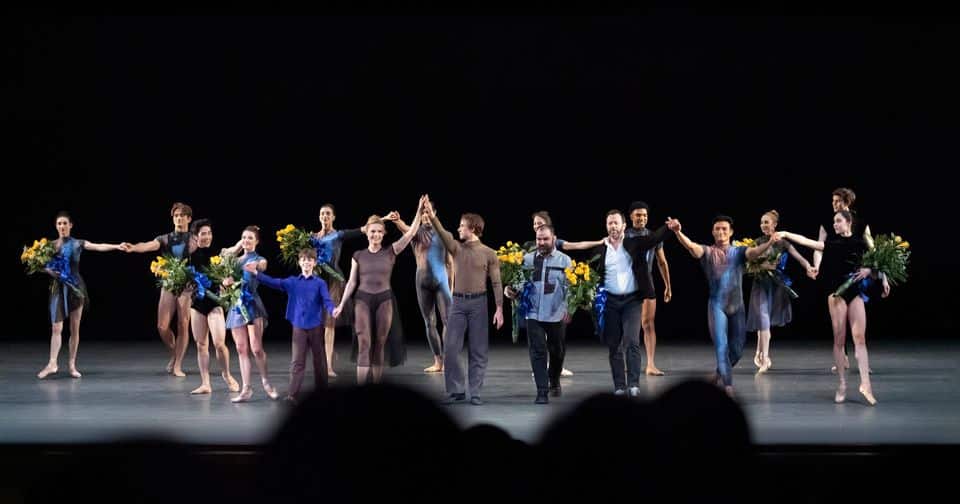
More than half US ballet companies are in deficit
balletA survey by Dance Date Project reveals that 54 percent of the largest 150 US ballet companies are finished their last financial year (FY23) in deficit.
The previous year (FY22) only 20 percent showed a deficit.
Something’s going badly wrong.


Might it be overambitious planning based on overly optimistic assessments of the pace of audience return after COVID?
The USA audiences have,the attention span of a goldfish, ballet takes time to unfold so…
Not all of us in the U.S. suffer from a deficit of attention, Omar. Ballet remains a very popular art form in The States. Indeed, scores of young people (especially girls) take ballet instruction at sites all over this country. Problem is, we lack a consistent base of publicly funded support, as you find in so many European nations. Even across the pond, though, some of that funding–especially in places like the UK–seems to be drying up.
So then what? I thinks arts organizations as a whole need to take a close look at how they approach the business side of things. 0verhead must be kept to an absolute minimum. And new ways to engage audiences–especially young people–need be a key focus of any organization. The traditional administrative structures no longer seem to work well for most small and mid size companies.
Here in my home town of Syracuse, our symphony orchestra declared bankruptcy back in 2011. The story is hardly unique. But the difference here is how the musicians made the decision to literally take over the show. They reorganized as a 501(c)(3) non-profit entity and the players now OWN the orchestra. To my knowledge, only one other ensemble in the country has charted this unique course.
Today, The Syracuse Orchestra programs a full season of pops and classical concerts. And the financial nimbleness of the model so far seems to work rather well. As for Orchestra outreach? Well, the seats looked mostly full at the last concert I attended. Not a rare occurrence, thank god.
I don’t know that this is a ‘one size fits all’ type of success story. And I still firmly believe that some of our tax dollars ought to support the arts no matter what (our local county government chips in with some support every year). But I do believe that outside-the-box thinking is what’s needed to reinvigorate the arts in areas where they struggle.
And of course, those of us who love to offer their opinion need to do their part by filling those seats. YouTube is great–I know I certainly watch it–but for me, nothing quite matches the magic of physically being there. Ballet, opera, symphony orchestras: They all need an audience to keep them alive. Let’s spread the word.
“Indeed, scores of young people (especially girls) take ballet instruction at sites all over this country.”
You know that a “score” is only 20, right?
But I’ll note that widespread children’s soccer leagues in the US have not resulted in widespread enthusiasm for professional soccer.
I think that once a kid is done with ballet or soccer… they are DONE and not highly interested in continuing to follow the people who have succeeded where they have not.
You’re a very literal man, Robert, but you are correct on calling me out on misuse of the word ‘score.’ The word ‘thousands’ might be more apropos. And while you’re probably right about youth participation not necessarily translating into lifelong interest, my point was that ballet is not exactly an arcane art in the United States.
Soccer, by the way, continues to see phenomenal growth in this country. And many young people dream of a life in dance.
Ballet in no way is in its death throes.
The headline and this survey is all wrong! How on earth can any art institution make a deficit? They all should just be subsidised by the government and open to the public free of charge! When we are treating our art institutions like private businesses, we sacrifice our cultural DNA. We have to stop this profit thinking and just spend as much on art as possible!
Sarcasm?
Something sure is going wrong. There’s so much competition for people’s money and so many options for entertainment that the fine arts can’t compete. It’s not just ballet; opera and symphony are suffering also. The movie theaters are struggling. Covid-19 made a lot of people realize that maybe staying home and watching a concert on TV is just as meaningful as going there in person. You don’t have to get dressed up, drive to the venue, pay for parking…and put up with the rude behavior of audiences. Ballet appeals mainly to women and getting the (straight) men to go is hard. Who wants to pay $120 per ticket to watch some dude prance around the stage when I could have spent that money and go to an NFL game or even better, Professional Bull Riding. Ballet companies have for a long time presented Nutcracker after Nutcracker to sell tickets and make enough money to survive the rest of the season but that’s wearing off, too. What’s really sad is that there are many, many youth ballet companies all over the country. Youth orchestras abound. But for some reason those youthful experiences do not translate into a life-long love of the art and the kids abandon their often remarkable abilities before hitting 20. I don’t know what the answer is, if there even is one.
When my husband was in jazz band in high school, they would sell them heavily discounted tickets to jazz concerts. It got them in the habit of attending concerts, and many still attend as adults.
For that matter, that’s how they hooked both of us on skiing as well.
I’ve never seen anything like that offered to my children, and it’s pretty expensive to take a family to fine arts performances (though we do try).
I am more optimistic than this. And I’m a man (straight if that means anything) and I absolutely love this art. Now, it does help that I also love classical music and my daughter is a dancer. I really think ballet and the other classic events need to be a destination for art lovers where a community of people regularly attend, not just for the art but for a magical evening, for the support of something timeless, and for the cohesion of the community.
The reason that youthful commitment doesn’t turn into lifetime commitment is peer group pressure. Just as the only permitted instruments are electric guitar, ditto keyboard and drums, the only permitted dance is what you see people doing behind Ariana Grande and the like in stadium concerts.
Mercifully the same pressures don’t seem to exist in the Far East. That is why so many of the new musicians who appear in this magazine are Korean or Chinese.
That’s an awfully large claim, based on a tired old stereotype of straight men as audience members for ballet, & other forms of concert dance. I’m not saying there is no validity to it, but there are many such men with a real appreciation for good dance.
In any case, the “dude pranc[ing] around” characterization is truly ridiculous, at least when it comes to good professional companies, & even many student ones. If you went to a performance & actually saw a dude prance around (other than for particular character roles), you are going to the wrong performances.
Barcelo:
I disagree that ballet is not a straight man’s game. Very old-school macho. And of course, much of the “prancing” is done by lovely ballerinas. But the music, the sets, the dancing…the arts unite to combine for an amazing experience. Give it a chance. As arts companies struggle , ballet certainly deserves support.
Is there an equivalent report in orchestral world?
I’m astonished there are 150 ballet companies in the US that even report fiscally! I can only think of ten companies off the top of my head that manage to pull off any sort of real season, and really there are only two (NYCB and ABT) that hold any (tenuous) national attention. Only one manages to hold down its own theater in NYC, the other being itinerant moving from venue to venue. As niche as opera is in the US, ballet is in the dark back corner of a niche.
San Francisco and Houston are pretty respectable. Miami City Ballet is still turning out a pretty good season. Pretty much anything else is just regional, and their fortunes — and quality — probably vary. But considering the great Edward Villella was involved with Oklahoma and New Jersey as well as Miami City after leaving NYCB, that quality is probably very good indeed in many cases.
Uh …
Dance Theatre of Harlem
Paul Taylor Dance Company
Joffrey Ballet
Miami City Ballet
San Francisco Ballet
Martha Graham Dance Company
Ailey
Lar Lubovitch Dance Company
Pacific Northwest Ballet
Trisha Brown Dance Company
These are off the top of my head. Need more?
A list of Ballet companies with a national reputation in the U.S. must certainly include the Joffrey Ballet in Chicago, the San Francisco Ballet (the nation’s oldest ballet company), the Boston Ballet, the Pacific Northwest Ballet…shall I continue? Hardly a dark niche. Indeed, the two you mention (NYCB and ABT) command an international reputation . ‘Nothing ‘tenuous’ about that.
FY22 was the 21/22 season. I believe there was still additional government funding in place from Covid, which would have gone away by 22/23.
Ben: “As niche as opera is in the US, ballet is in the dark back corner of a niche.”
—-
Rap music is admittedly more popular or mainstream than ballet is. That’s increasingly also applicable to the other performing arts of opera and symphony orchestras.
Throw in a lot of today’s social-political attitudes (the kind that dominates much of the world of arts and entertainment) and that becomes an ironclad trend.
Brave new world, folks.
This is a very sad reality. I honestly think when we started eliminating funding for the arts from our public schools, only to increase funding for sports in public schools, our younger generations lost the best opportunity to be exposed to the different art forms. Music, drama, dance, you name it, requires an early introduction to these forms of art that we are quickly losing. When you go to Europe you will find so many youth in attendance at the ballet, opera, theater, orchestra. Why? Because it’s in the way they have from their earliest age been exposed to the arts, and humanities. When I was growing up, I’m now 70, I attended public schools that were well funded in the arts programs. That opportunity to be a part of many programs was key, and paramount to a lifelong love of the arts. Bring back the arts in public schools. In doing so, we will have captured the interest, and love for all the arts, including ballet.