
English National Opera hires an EDI enforcer
OperaFrom Arts Professional:
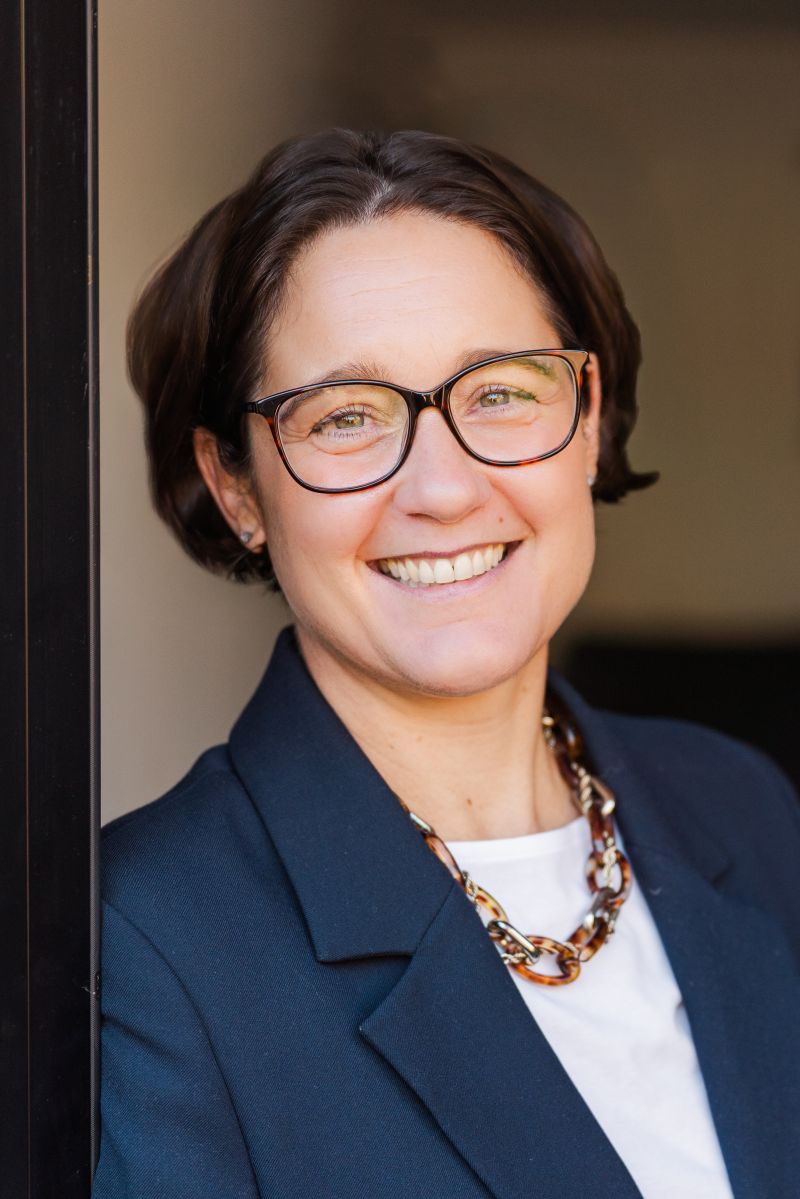
Nicky Cardillo-Zallo (she/her) is to join English National Opera as chief people officer at the start of the new year.
A people and culture consultant working across the arts, education, and charity sectors, Cardillo-Zallo is to progress “key areas” for the organisation including work on equality, diversity, and inclusion (EDI), safeguarding, and leadership initiatives.
‘Nicola’s leadership, strategic insight and passion for people will be instrumental in enhancing our organisational strength and in shaping a values-led, inclusive culture that supports our long-term success,’ said the company’s fleeing CEO Jenny Mollica.


Just this morning I told my spouse that I would be in jail if I lived in England these days for my memes and critiques of my government in the USA. Keep staying woke England. I rip on the Mayor’s of US cities who are ruining them. Chicago just received a fail rating from London’s The Economist. NYC will follow.
Coffin. Nail. Last.
You can say a lot of Russia, but they avoid this braindead sh*t.
I didn’t know EDI is still a thing in the Trump era.
The UK is, like, a different country from the one Trump rules. I think there are several other countries like that, too.
My impression has been that while the U.S. certainly has had a major problem with excessive wokeness, it’s worse in the other Anglosphere countries.
“equality, diversity, and inclusion”
Equality: maybe look to have the Chorus sing as much during the year as the Orchestra plays….
Diversity: aspire to put on more grand opera in the Coliseum so opera, as one of the highest art forms, sung in English, becomes more available to as diverse a range of people as possible.
Inclusion: don’t forget to use the Chorus for most if not all of the season from beginning to end, lest they feel left out (see too Equality, above).
An abbreviation used for several years now is TLTR (Too Long To Read). So how about TTTC? Any guesses?
Too tired to care?
Are you fine with:
1. leading men/groping choristers?
2. conductors hitting young singers?
3. singers not being hired or being jeered at because they’re too fat?
4. black singers being relegated to the small roles?
5. some sections of the orchestra being all male?
6. promotions based on who’s sleeping with whom?
7. a lot of the situations that people write to Dear Alma about?
If so, you probably won’t want EDI near you.
Yes, the whole jargon and bureaucracy surrounding it is irritating and easy to mock, but that what it’s there to combat isn’t isn’t exactly desirable either.
False equivalence. We don’t want incompetence either. Neither do we want color, sex or gender mandates. Didn’t fool us there Mark.
Bitterness. Much.
The fact that you apparently believe that any of the ludicrous fictions presented by “Dear Alma’ come from real musicians tells me everything I need to know about you.
It seems to me that the real problem is simply that there are too many people out there behaving badly, either out of ignorance or just having a bad, primitive character. The urge behind bad, anti-social behavior is egocentric to the core: no concern or responsibility for anything outside oneself, a way of being ‘individualistic’ as an islated island in a chaotic world. Social control only helps a little bit to offer some corrective pressures but is mostly ineffective in a general sense. So, the problem has been turned into a political one, due to the idea that better behavior can only be implemented by force, by the system of the institution or organisation. So, a whole army of staff is hired to make sure the rules are being followed under the threat of reprimands and maybe, even being fired.
Better is to improve general education: in the schools on all levels, in terms of information about civilisational values, about civility in general.
But both the EDI programs and educational efforts are in conflict with a general trand since the sixties of the last century: ‘be yourself’, ‘be emancipated’, ‘it is YOU who determines your life, your future’, etc. etc. So of course generations later there are many more people misbehaving than before. EDI programs will thus be experienced by many people as censorship or authoritarian suppression.
And how much do they pay these people? I’d rather it were spent on musicians….
“Leadership, strategic insight and passion…” Oh dear God. That’s enough to send me to the vomitorium… The worrying thing is – these people mean it. It makes me not want to support E N O. What a load of BS.
The vomitorium was just a wide corridor in the theater of Ancient Greece, i.e. the exit.
Also them: were losing support and audience numbers are getting smaller.
It is the result of the ‘culture wars’ that rage since the sixties of the last century at most the universities in the West. Real social problems about bad behavior became subject of research and theorizing, leading to abstract concepts about all kinds of emancipation and suppression, exclusion, discrimination etc. etc. – in short: categorization of types of exclusion and of conceptualization of minorities. This offered a way of turning bad behavior into a political problem and thus, political solutions, creating many jobs for socially-concerned people. And also many jobs at universities discussing society in a context rather removed from reality. Ideas from the uni bubbles dripped through to the real world, hence real jobs created on the basis of conceptualizations. This in turn creates an environment where people can begin looking for reasons to be offended and not feeling safe, so that they can complain according to conceptual categorizations, which offers an easy means of identity confirmation. All of this can very easily create imagined impairment, and who is in the position to check? The EDI person? But what if she/he/they acts according to the same conceptual framework? What is a justified complaint and what not, on which basis? Hence the confusions and unfair treatments.
equality – play as much britten as mozart
diversity- support emerging talents
inclusion-welcome people to listen to the masters past and present
Yeah i mean who is not on board, this is what conductors do so who is this person again?