
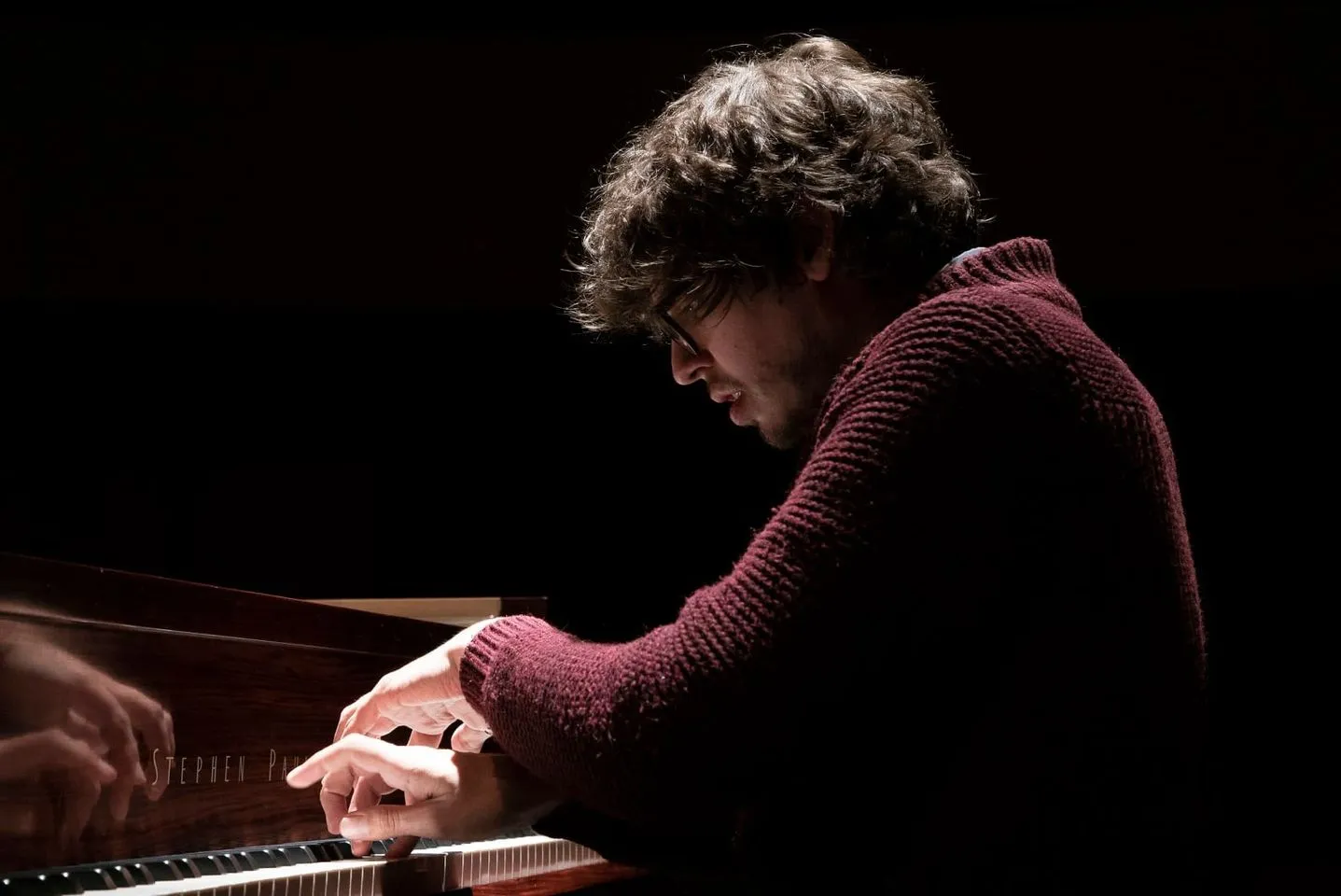
A distinguished pianist has a blast at critics
mainThe text below is taken from a longer social-media rant about critics by the French pianist Lucas Debargue.
We could take issue with a number of points – not least that it was critics who raised Debargue from obscurity when he was struggling in competitions – but judge and respond for yourselves.
DISCLAIMER :
1) this piece is a critique itself : it is in many ways using common tools that what it denounces here or there. So it is VERY easy to relativise and I wrote it and shared it as an exercise for the mind, for whoever would have the patience to go through it. It is in many ways my own « exorcism ».
2) I support without reserve music lovers who write about music and musicians.
3) I developed on what I identify as an ideology, not on this or that person’s choices. It is obvious that everyone is free to do and say whatever he/she wants. Some use these rights to denigrate or insult ad personam : it is far from what I am doing here. I squeeze concepts, not people.
… Classical music is dominated by constant fear of judgment from peers and critics. It is DESIGNED to avoid real creativity, invention, spontaneity. It has established itself apart from all other musical genres, almost as an anti-musicianship that considers itself supreme musicianship — training abilities that go AGAINST improvisation and creation.
It’s not that classical musicians don’t learn to speak the musical language; it’s worse: they learn NOT to speak it. The text is absorbed to be restored exactly as it is, not as a base for transformation or variation. The interpreter is the executioner of a score read as a fixed program, and will be evaluated for the QUALITY (as for fabric) of his rendition.
The classical music field is practically entirely shaped by the relationship between a musical performance and its immediate evaluation. Musicians themselves are trained in a way that makes them become critics of their own and their colleagues’ work, practicing with critics’ parameters in mind.
Some of these main parameters are: sound, technique, posture, taste (or « style »). We still lack a rational definition of those elements, despite the urge to separate the musicians who are “in” and the ones who are “out” with them. What is a beautiful sound (what about Michelangeli’s raw Bach–Busoni Ciaccona)? A « flawless » technique (what about Cortot)? A good posture (what about Gould)? The right taste (what about Horowitz)?These parameters are empty shells that cover the arbitrary, capricious world of subjectivity. Despite not having any consistency, they have become the main guiding lines of a musician’s work. But they are so vague that the musician usually relies for a long time on a dependence on a pedagogue, who will fill these empty parameters with anything he feels inspired to, from the most academic mantra to the most esoteric metaphor.
The most striking effect classical music has on its performing servants is revealed by their bodies on stage. I’m not talking about posture or the tension in their arms and hands — I leave that to experts in technical evaluation. I’m referring instead to bodies detached from the music they play, following a restrained, awkward choreography, as if every cell were screaming, ‘Why the hell am I doing this?’
These bodies have forgotten the feeling of dancing, or the warm vibration of the voice in the chest while singing. They’re not musical bodies, but submissive and suffering enveloppes of the classical music ideology.
::::
Critics are not just a little bunch of harmless, frustrated amateurs. Critics are THE characteristic figures of classical music, its human final personification. They embody a major pillar of what is called “classical music”: they are the final stage in the transformation of a curious child who could have become a musician and lived a fulfilling musical life into a grumpy or unctuous (depending on mood and digestion) commentator on the works of others, without being personally involved in any kind of musicianship. It’s the last stage of the transformation of music into an abstract distraction or elite entertainment, subject to endless evaluations and comparisons.
In that ideology ruled by music criticism, which is like a genetically transformed musical organism, another important rule is that “greats cannot fail”: critics will usually praise blindly some elected “legends” despite all the slags or pedestrian things in their playing, sustaining it with bad faith. For much less than such slags, musicians whom critics decide to exclude from the elected crowd find themselves harshly blamed.
The « legends » are inaccessible, and they have zealous guardians who make sure they remain inaccessible forever.
As a consequence, musicians get infected by prejudices such as: « I have a limited career because of my limited technique », « he has an outstanding career because of his outstanding technique ». As if career depended on a “level” of musicianship. As if musicianship depended on having a career.
As it seems that anyone in classical music — from the music lover to the musician, including the teacher — can be seen as a critic, an abstract hierarchy has been created, ranging from the amateur to the « professional » virtuoso or « professional listener » (!), to give more authority to some than to others. The criteria used to place people on this scale are at the same time supposed to be objectively technical (even though they’re largely esoteric : the usual carnival of « acoustics », instrument sound and mechanic, « respect » of literal indications on a score) AND based on arbitrary and subjective credentials — a miracle of intellectual contortion, which leaves a wide dead zone for critics to decide if this or that musician « deserves » to be where he is, creating fake polemics and controversies that reinforce the hierarchy. As for any hierarchy, it is based on intimidation, and despite the adoration of supposed « competence » in classical music, it’s most of the time self-confidence that gives more authority to some than to others.
::::
Thus, if classical musicians get trained to become critics by pedagogues — and if any creativity has been expelled from the start — the only difference with critics is the instrumental craftsmanship. It’s the same ideology at work, just with duties divided in the end: the musician concentrates on instrumental expertise, and the critic on expressing with words an evaluation of the playing. The critic doesn’t touch the instrument; in « exchange », the musician doesn’t touch words and somehow forbids himself to express anything too strong about music. « I am so happy to play », « this is such beautiful music », « I dreamt of playing in this hall » — these are sadly the main substance of many interviews of classical musicians, where fake wonderment prevails by constantly repeating the « gratefulness of belonging to the family of musicians ».
Indeed, classical musicians aren’t supposed to express anything else than gratitude….
It’s the way musicians practice and play today that brings legitimacy to critics — in addition to the latter getting bribed or boot-licked by musicians reposting their rags. I reposted critics myself: I stopped and wish to never do it again, because it feeds the classical music illness.

He may be too busy practicing his own instrument to watch and listen to other contemporary performers. Orchestral players, for instance, nowadays tend to be the very opposite of “bodies detached from the music they play, following a restrained, awkward choreography”, bodies that “have forgotten the feeling of dancing”. He may also be overvaluing the importance of music critics.
I fear his ‘digestion’ may be unsettled. Maybe this screed was ‘inspired’ by some bad reviews? A little humor might help: I recall a performer whose publicity included only his worst reviews with an asterisk announcing “Good reviews available on request.” Meanwhile, it has ever been thus- think of the first reviews of many works we today consider indispensable. “Noise!” “Trash!” “Vulgar!”
Indeed. One is reminded of Slonimsky’s great collection: ‘Lexicon of Musical Invective’.
Do critics still exist? I mean this earnestly. In the USA they went the way of the dodo and it seems to me that literally no critic in the world can make or break a career or even have the slightest impact on the permanent record. These are vestiges of influence that existed long ago in a previous century.
Critical opinion probably never should have existed in the first place but the internet, where everyone has an opinion about everything, killed that culture of taste-making.
What matters is the music that people listen to, the concerts that they go to, and the ((occasional) physical)) recording that they buy. By whatever imperfect means the public really does call the shots nowadays. Tangentially, that is the conflict of our times is that the suits, and not artistic people are calling the shots at major institutions and then wondering why the public isn’t showing up.
I would never say that “no one ever listened to critics.” because sadly they once did. But no more.
In an ideal world, music life would consist of 4 parties: the composers (dead or alive), the performers, the audiences, and critics who would be professional, well-educated musicologists who also have a practical experience in performance. Such structure would form an interrelated music culture where independent critics simply represent reflection and information, bridging the gao between audiences on one side, and composers and performers on the other.
That world has still to be developed.
However, it depends upon the local culture whether music criticism is still practiced professionally or not. In Germany for instance there still is a serious music criticism culture, because many people still take classical music rather seriously.
This is quite true for critics of film and literature, but is audience interest not much less important in classical music with its dependence on government funds and wealthy donors?
The role of a critic, at least outside the US, has never been to “make or break a career.” I know it used to be said that Clive Barnes could close a Broadway show in a single night. If that’s so, it says more about Americans than it does about Barnes, or criticism. In England, where the most heavyweight theatre critic of the 20th century was Kenneth Tynan, I remember reading one of his in which he admitted that he had “singularly failed to appreciate” the quality of Pinter upon his first appearance on the London stage. It did not stop Pinter from becoming a theatrical prince, all the way to a knighthood and a Nobel Prize, built on one West End success after another.
Tynan’s view was that his job was to report what went on in a particular theatre on a particular night. But into that report went an exhaustive knowledge of, and a devout appetite for the subject of the evening’s event.
Music and other art forms deserve no less. If great careers emerge from good reviews, you have to know they would have anyway because someone of accomplishment has simply reported on something excitingly good. It may spread the word faster but back in the day, when people actually did go out and seek something they hoped would offer them a memorable experience or at least a great evening, all a good review could do would be to help spread the word. A great review, such as those of Tynan, the music (and cricket) writer Neville Cardus, and the wonderful American dance writer Arlene Croce, can be collected with its fellows into books that years later can still inform, delight and even transport you into a place they were. No real critic wants to do anything other than make sure that an art form they love and live with will thrive.
He’s so long-winded.
Next !
“The text is absorbed to be restored exactly as it is, not as a base for transformation or variation.”
I remember Mr A Brendel basically saying the first part of this sentence as being his guiding principle, and it didn’t do him any harm.
On the other hand, Uriel Herman, who had a successful career as a classical pianist, could not resist transformation or variation, so he became a jazz pianist, still with Chopin running through his veins. (He explained this at a wonderful concert at Ronnie Scott’s.)
“Practicing with critics’ parameters in mind”? Seriously? Mr Debargue seems to be a deeply insecure, troubled young man. Perhaps he needs to think what he wants to say though music, rather than worry what others say about him.
Cher Lucas, et en voici une autre, de critique, dont la lecture vous sera inutile.
Continuez à nous enchanter sur scène, sans vous soucier des pisse-vinaigre jaloux de votre talent singulier!
“These bodies have forgotten the feeling of dancing, or the warm vibration of the voice in the chest while singing. They’re not musical bodies, but submissive and suffering envelopes of the classical music ideology.”
mots justes !
It’s not advisable to read reviews of your concerts. Most review, especially those appearing in high-end papers, are a virtuosic high quality language game that’s ripping everything apart. Those review should be an informed description about the main points of the interpretation, was it unique or more conventional and so on … that’s not the case in most cases … so what?Does he think he can change the way of affairs?
The question remains: how do we extricate “classical music” from its status as a static artifact in a dusty museum corner? How do we facilitate an environment that generates new Beethovens whom we can perform with raw immediacy—as the author would like—rather than dedicate ourselves to cloning the same old (wonderful) one? Has music moved on, and should we resign ourselves to enviously watching a Taylor Swift or an Ed Sheeran usurp the market, wishing that they were a bit more artful, a bit more skilled as music creators, if what we had been doing was snubbing our noses at them in contempt, for a whole century, and pushing ourselves ever farther into our dusty corner?
Pop music and classical music are VERY different genres.
It is nonsensical to mix them up or to think that types of Ms Swift are the heirs of the Western classical music tradition.
Also, good performers fill the clean notes of the score with their subjective experience and bring them to life. This means: playing with subtle nuances of rhythm, metrum, tone projection, colouring, tempo shadings. Only mediocre or bad performers try to mechanically play the notes as precisely as they are written down. Because so much of nuances in performance cannot be notated, and are dependent upon musical understanding, which is an emotional quality inaccessible to rational control (and it better remain so). There is something like emotional intelligence and the best performers have that in abundance, and it is as clear and logical as any rational understanding.
Could not agree with the author more. And my impression is that he assigns the blame equitably: not just to the music critics, but to the pedagogues, and importantly, to the performers themselves. Perhaps the state of music criticism is not the cause, but the symptom. And of what? Of the fact that “classical music” today is a re-creative, rather than a creative, art form. Since the advent of recordings, there are hundreds, if not thousands, of renditions of a such-and-such Beethoven sonata or a such-and-such Chopin polonaise. The interest of a classical music performance is concentrated in the comparison to a previous, well-accepted interpretation of a given work. There are no Beethovens or Chopins creating new music today; and why would there be, since the music industry is consumed with rehashing the original Beethovens and Chopins, and no room left in the market for any new iterations. (Living composers working today are not a result of demand in the market, they are an oppositional element inhabiting a niche outside the mainstream. Their output is accordingly of a quality symbolic of denial of what the contemporary listener would desire. Lots more could be written on this.)
??? Lots has already been written of the problem of contemporary music, which only began to appear in the first half of the last century. And there is now appearing a new music which is welcomed by classical music audiences, with composers like Bacri, Connesson, Dubugnon, Matthews, etc. etc. and then I don’t even mention the halfbaked process music that is now often sandwiched between golden oldies.
It may surprise people to hear that someone like Nicolas Bacri is as good as Shostakovich or Sibelius or Vaughan Williams, and while performers and audiences have picked that up immediately, programmers can’t hear it, because they don’t believe such thing is possible and it upsets routine anyway.
Ignore the “critics” . They review a tiny portion of live performances. Big name artists and venues. Not the 1000s of local concerts . I’ve heard great music live in tiny churches or in music schools.
The music that I love was written by great men. I try to play it as well as I can so that the audience will also love it and continue to buy tickets so that I can make a living. But, as Don Corleone said, “It makes no difference to me what a man does for a living.”
Bravo et merci, Lucas!
Non seulement vous êtes êtes un magnifique musicien, une présence particulière sur scène, une imagination sans fin de programmes originaux et intrigants, non seulement vous êtes aussi intelligent mais avec l’intelligence qui vient du coeur, non seulement vous composez et improvisez (rares dons!), non seulement vous parlez sur scène avec votre public avec naturel et sympathie…et je vous aime et admire pour tous ces motifs!
(Et non seulement “mon” musicien du coeur vous dirige et vous apprécie, c’est une évidence, cela se voit dans vos deux sourires et gestes sur scène…et cela seul suffirait à mon bonheur!)
Je me réjouis de pouvoir vous réécouter le plus vite possible en vrai. Bon vent à vous!
100% agree! Bravo to him for saying it.
This pianist’s reflections don’t acknowledge his own advantages that have come from critics, yet they ultimately highlight insights that are broadly valid and thoughtfully expressed. His perspective may come from a place of privilege, but the substance of what he writes rings true and feels largely right on the mark.
Mmmm…. someone got a bunch of bad reviews.
But I think that critics are not at all the defining factor of a musical career. It depends upon the degree to which a performer is able to musically engage the audience, and if that is picked-up by programmers, which may take some time, people will invite him/her. There are many factors in play which make a career, and critics are only a very small component.
Many critics are indeed failed musicians, and some transcend their love for music into genuine expertise and in that way, sublimate their frustration into something positive and creative, others misuse their accidental media channel to spit their jealousy and try to get the truly talented players down with their twisted emotions.
The fact that critics mostly are not practicing musicians means that nobody takes what they write very seriously. Reviews are more like marketing signals, or simply descriptions of events. Some concerts are great successes but are reviewed negatively and the other way around. There is nothing wrong with this since music is not a science, it is much too subjective an art form. Performers should not take reviews very seriously.
‘Only positive reviews are right!’ (Richard Strauss)
Very well said, all of it. I almost wanted to stand and applaud numerous lines in that.
who the hell has time to read all that?
I disagree. Critics have nothing to do with classical music at all. With a few exceptions, they are not musicians, yet they feel privileged to analyze and tear apart artist’s work, regardless of the consequences. Few, if any, adhere to Virgil Thomson’s guidelines for how to write about concerts.
He’s not altogether wrong. The parameters of how the classical canon “ought” to be played have increasingly been set by critics and academics. This is especially true in music of the baroque and classical periods, extending even to Beethoven, and the existence of a supposed “style” which, if deviated from, is accused of being “tasteless”, “unfaithful”, “inauthentic”, etc. Then there’s the lionization of certain sacred figures that the critical establishment has determined can do no wrong, i.e. Sviatoslav Richter, Carlos Kleiber. The end result is indeed the ossification of interpretive choices classical musicians can make without, in effect, being jeered out of the room by obviously influential, even determinative “tastemakers.” Long story short, the kid ain’t wrong.
The writer of this article is as clueless and misguided about the practice of music criticism as he is about the goal of a musical performance, which is to exercise creativity within the bounds of classical traditions.
Many critics (Andrew Porter, Alan Koznin, Ernest Newman, et al) are also fine musicians in addition to being stylish, erudite writers.
It is indeed nothing more than a verbose, arcane and accusatory rant by an artist who blames critics for his obscurity. Could it just be that his playing is unremarkable? There are hundreds of musicians, some of whom he cites, who have become household names without being mauled by the critics. All that this paranoid screed has achieved is, I guess, that most of the readers will avoid hearing him. An unfortunate own goal.
Wow. I wish someone wrote it 30 years ago. All true.
Very astute thoughts. Hopefully more people will comment. I’m going to sleep, and then practice piano.
Excellent stuff, Lucas. How true, how true…
Been there, seen that. Playing in the nude, wearing funny caps, playing jazz (badly), holding one’s own resurrection party.
Strange.. why am I the first to comment..? Well..I wanted to express my appreciation for this profound analysis. It hurts because, in part, it really hits home. Also the music world is not free from the fundamental principles of the capitalist world: competition!
Just look at the International competitions: the so-called “experts” arbitrarily squeeze aspiring musicians into a tight corset. You’re only allowed to be a tiny little bit different, only within a narrowly defined framework. He’s also absolutely right about the untouchable status of many long-established soloists. They can scratch and play out of tune as much as they want, it doesn’t matter, they are anyway constantly getting invited back. Everyone else is judged by the strictest standards, with critics eagerly searching for even the smallest flaws with a microskope and the musician must always fear to “make a mistake”! And worst the ones who mean to have the monopoly on the “truth”/ on the true way of how to interpret a work..
I could hardly get through this rambling, scatterbrained rant. What a lack of focus and objectivity!
This sort of rambling, very egocentric, self-centred way of seeing the world is a sad consequence of the poor French education system. I taught in France for 12 years and have encountered this narcissistic verbosity on countless occasions. The French education system instills in its “victims” a unique inability to see things in a balanced or nuanced way. It teaches neither self respect nor respect for others thoughts, profession or feelings. It encourages sweeping generalisations, such as Mr. Debargue’s defining ALL music critics as “frustrated amateurs” and part of the “classical music illness”.
Using Mr. Debargue’s self-centred logic, I guess that he would say the same about journalists, who comment on political events, criticise politicians, Presidents and Kings, or food critics who recommend or criticise restaurants and gastronomic offerings.
I really do not want to spend too much time commenting on this rambling, rather childish, arrogant and pseudo intellectual rant by a pianist who has yet to impress me by his pianism.
I am not a music critic and never will be one, but when I read French drivel like what Mr. Debargue has written above, I have an even more diminished desire to hear what he has to say musically. For me, being a great musician means understanding how to transmit ideas and feelings and being able to receive the feelings and emotions of others. When I read the above rant, it is obvious that this gentleman lacks basic respect for others (another common French problem) and is yet another French windbag, talking and talking and talking, listening only to themselves and holding others in disdain and contempt.
If you want to see more of these types of people, just tune in to any French news channel and watch how they “debate” and discuss things. They shout over each other, they constantly interrupt each other, they insult each other and they only want to hear themselves and have neither respect nor interest in anyone other than themselves.
certainly, you are french!
But one should understand French culture. What looks like impatient self-centred word mongers to Anglosaxons and Germans, is in fact enthusiasm about the subject at hand. Nobody takes everything very seriously, it is the foam of bubbling champagne which is the way the French consider culture in general. In discussions everybody disagrees with anybody else and there is no attempt at understanding or consensus but afterwards everybody goes home completely satisfied and with the feeling that Culture has been generously served. In other worlds: it is noise and meant as noise. The real work is done in private, in writing articles, books, or practicing for concerts, or painting in their studios. Public discussion is theatre and flag swaying and ventilating the lava of emotionalism which is always very close to the surface.
I accept that different cultures have different approaches to things, but I do not accept disrespect and rudeness from any person no matter what culture they come from.
I have travelled this world extensively, having visited more than 85 countries and interacted with individuals from nearly 100 different cultures. The French stand out to me as among the worst mannered, disrespectful and unfriendly humans that I have ever encountered anywhere.
All of their superficial “Bonjours” and “Oui Monsieur/Madame” is nothing but a facade, a ritualistic formality…when minutes after addressing you that way, they show incredible disrespect and condescension. It is no wonder that they are ranked as the most unfriendly and rude nation in the world.
The long unreadable text by the French pianist above only proves my point.
Passez donc votre chemin, Monsieur Nikolai, évitez les français et la France en général, surtout évitez d’aller écouter Lucas en risquant un sévère urticaire…ou, qui sait? tout peut arriver, une découverte enchanteresse!
They think they’re having a Cartesian dialogue, building a structure of arguments on an often absurd proposition.
So boiled down to its central nugget, he says music criticism can be deeply flawed in its analysis and even in its intention. It certainly can be.
So can criticism of music criticism.
I always wonder why there is no culture of criticism of music criticism. After a concert, there will be a review, and a couple of days later there’s a review of the review by another critic, or by a performer or an audience member. Such practice would enhance the relevance of classical music in the public eye instead of the generally-held view of the genre as an elitist entertainment for the well-to-do.
It doesn’t matter what people or critics say about anyone. In fifty years, nobody will care. What we leave for future generations should only be what they acquire from us, recordings, videos, or new music brought into existence so they benefit from our existence. As they say, talk is cheap.
Bud Herseth opined that critics are nothing but leaches. Riding on his career in pursuit of notoriety.
I don’t know what it’s like in Europe now, but written criticism of classical music in the US is dead. Completely dead. And it’s not coming back. Whatever power critics wielded in terms of raising up artists or ruining them is totally gone. No one who is casting in opera or issuing contracts for soloists with orchestras cares one whit about critics because the audience doesn’t care and doesn’t read them. The final nail in the coffin was the recent destruction of the critical desk at the NY Times. There are a few old hands hanging on in LA, Philly, Chicago etc., but once they’re gone, that’s it.
Amen!
Debargue has been the victim of Alain Lompech (he is not the only one), a particularly vicious french musical critic …