
Alastair Macaulay awakens Dead Choreographers
Alastair MacaulayOur critic in residence is back in New York, looking for heritage dance.
by Alastair Macaulay
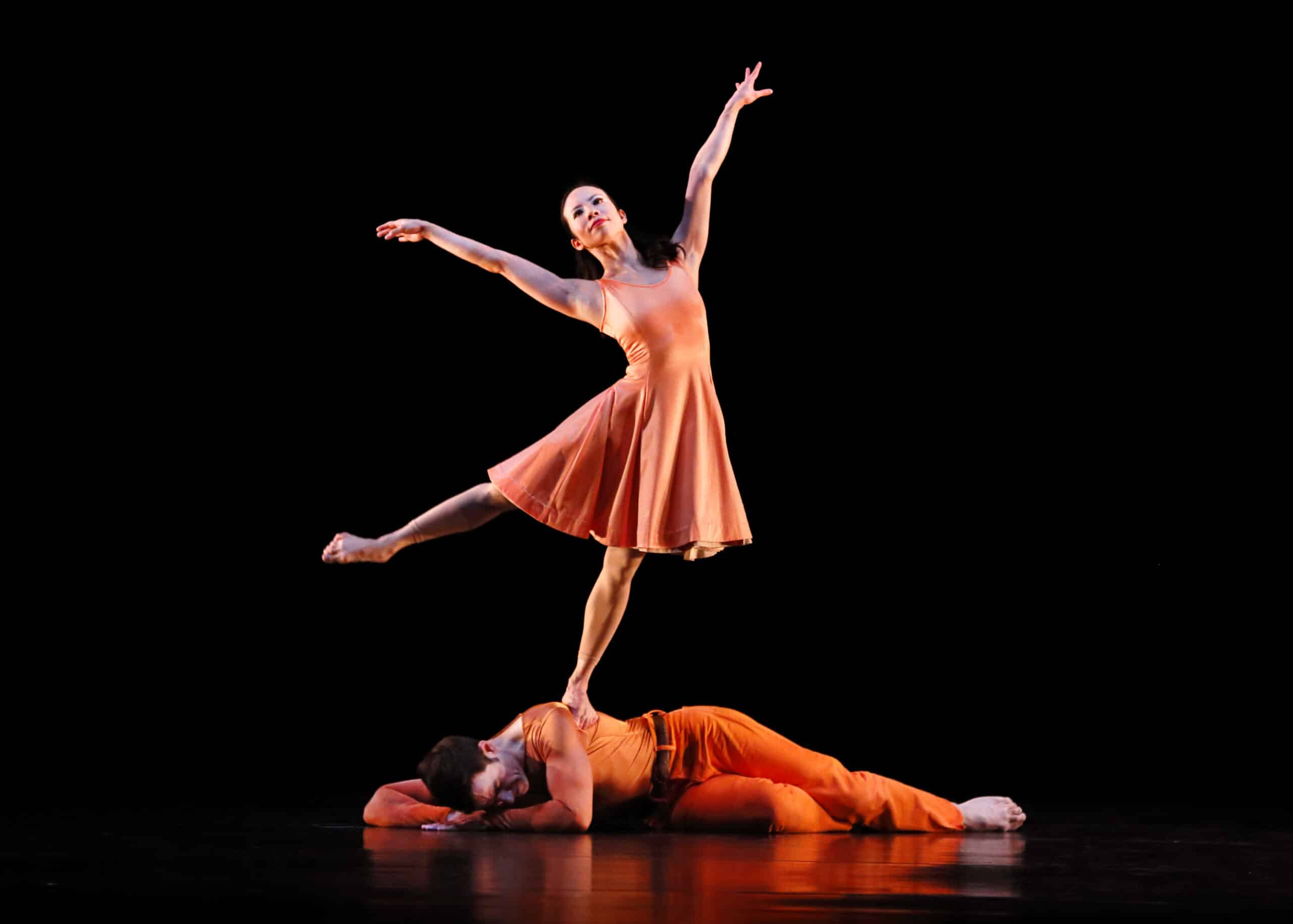
New York: Back in the day, many of the modern-dance and postmodern-dance choreographers of New York presented their work in lofts. These lofts had usually been floors of industrial spaces – printing shops, garment factories, flophouses – before artists converted them into studios that were also living spaces – and some of them included rehearsal and/or performance spaces too. One of the most historic such buildings is at 541, Broadway: historic because each floor was occupied by a vital figure of postmodern New York dance: Trisha Brown; David Gordon; Lucinda Childs; Douglas Dunn. Brown and Childs moved elsewhere years ago; Gordon and his wife Valda Setterfield died in 2022 and 2023. But Wally Cardona, son-in-law and colleague to Gordon and Setterfield, has – with his co-dancer Molly Lieber – revived Gordon’s hour-long 1975 duet “Times Four” in the loft where it had its premiere, fifty years ago. The 2025 audience knows that it’s revisiting history. The run of performances has even been extended.
What’s still radical about this essentially pedestrian duet is how its extreme simplicity of means is maintained without a break for an hour. The two, maintaining a steady rhythm throughout, move fost, but never quite stop. They stand, step, stand, kneel, lean, stretch on the floor, execute a couple of jumps, kneel, stand, execute quarter-turns. Over the duet’s duration, its geometries change: though the man and woman are mainly facing the same direction, they are sometimes on one diagonal to each other, sometimes on the opposite, sometimes on a horizontal line. In unison, as the dance proceeds, they peel off layers of clothing – the combination of formality and informality about such matters is funny.
The dynamics of this duet are all legato. We seem to watch phrases that repeat earlier phrases, but then we discover that each sequence leads somewhere new. The geometries that seem fabulous turn out to keep changing. A fascinating, strange, hypnotic, and ceremonious pas de deux.
II.
Only in recent decades has Britain developed companies devoted to the work of individual choreographers (Matthew Bourne, Akram Khan, Wayne McGregor) – though it looks as if the British are keen to jettison choreography by its senior artists. (Richard Alston may have been knighted but it’s hard to find any professional British dancers performing any Alston – he’s only Britain’s finest dance-maker. Siobhan Davies may have been made a dame, but it’s impossible to find anybody dancing the work of this eloquent, sensitive, and historic choreographer. The British dance establishment has become essentially anti-establishment.)
In America, by contrast, one-choreographer companies go back more than a century. Several of them now specialise in the work of eminent individual choreographers now dead: the companies of Martha Graham, of José Limòn, of Paul Taylor, of Trisha Brown. American ballet keeps reviving far more works by George Balanchine (1904-1983) and Jerome Robbins (1918-1998) than British ballet does by Frederick Ashton (1904-1988) and Kenneth MacMillan (1929-1992). (Merce Cunningham, always audacious, made the opposite choice, announcing before his death that, after his death, his company would tour the world for two years but then fold.)
During or before the 1980s, Taylor (1930-2018) and his company became the mainstream of American modern dance – less renowned than Martha Graham (for whom he had once danced) and far less disconcerting than Cunningham (for whom he had danced at an earlier stage), but even better at giving the audience a wide range of beloved dance classics. This remains true, seven years after his death, even now that only four or five of its dancers ever worked with Taylor himself. His company, specialising in his work but no longer exclusively, is still drawing crowds for three weeks each November to the big David H. Koch Theater (formerly the New York State Theater) at Lincoln Center: always the highlight of the company’s year. Elsewhere, admittedly, “Taylor” – the name on the posters and programmes – tends to draw far smaller audiences for far fewer performances. In the New Year, it comes to Covent Garden’s Linbury Theatre for three performances (January 27-31) of a programme of two works by Taylor and one by Robert Battle.
The Taylor company began to connect itself to younger choreographers during Taylor’s own lifetime. That was a good idea, with outstanding results in Pam Tanowitz’s Bach creation “All At Once” (2019), made within months of Taylor’s death .
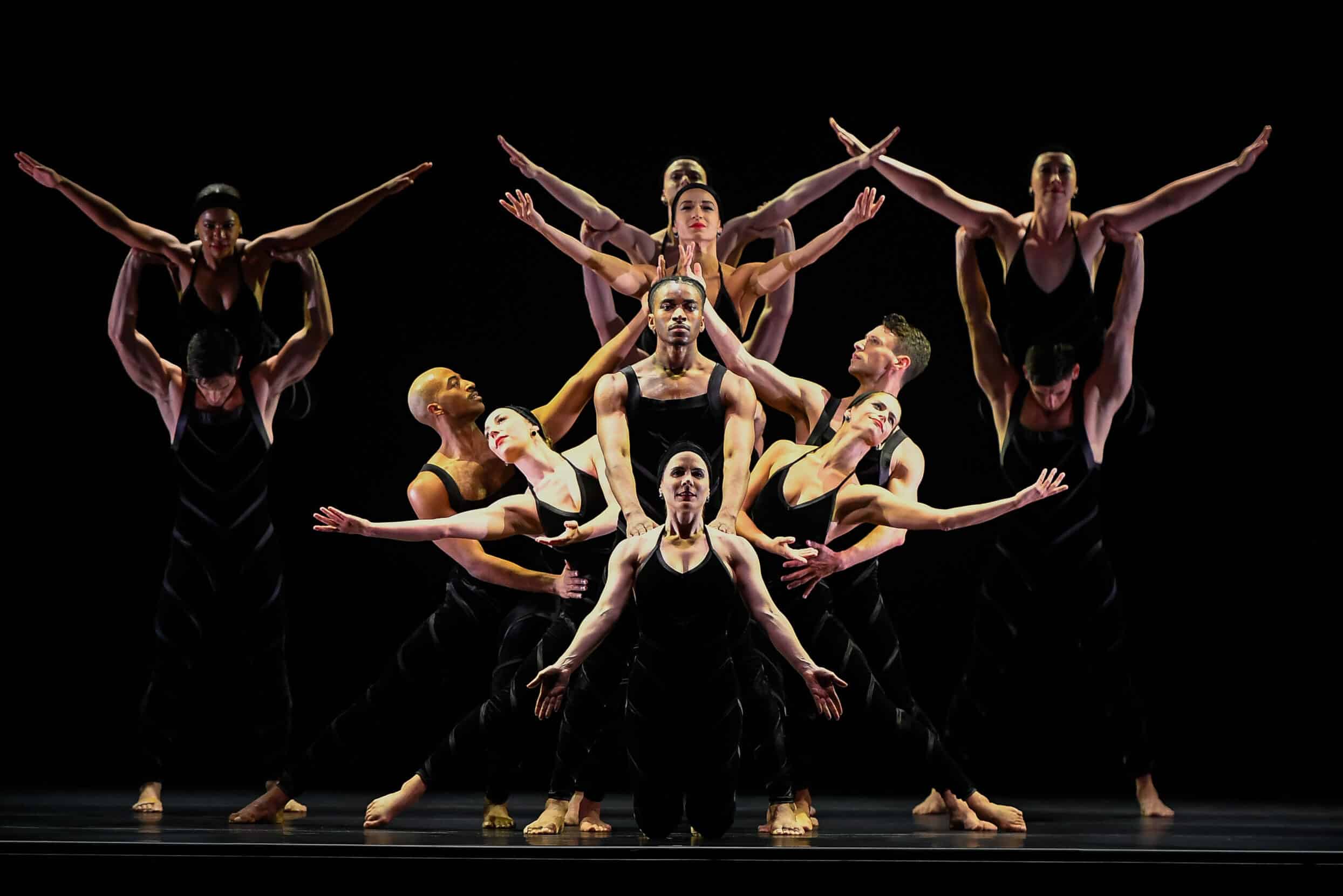
Los Angeles CA – A cultural icon and one of American history’s most celebrated artists, Paul Taylor is hailed as part of the pantheon that created American modern dance. at the Los Angeles Music Center in Los Angeles, CA June 16, 2021. (Photo by John McCoy)
It was, however, truly silly of the troupe in 2022 to appoint Lauren Lovette as resident choreographer. Lovette, who had emerged as a principal of New York City Ballet and who even now is only thirty-four years old, was a sweet and often lovely dancer but without virtuoso strength. (She was also the only City Ballet principal I have ever seen to overlay Balanchine choreography with winsomely ingratiating manners.) As a choreographer, however, she remains a nobody. Even though she took up professional choreography in 2016, she has still neither developed any particular choreographic style of her own nor (surely the choreographer’s most basic gift) has she shown any flair for making her chosen dancers look good. Next week, I’ll report more on her work for “Taylor” and that of Robert Battle, the company’s second but more experienced and more talented resident choreographer.
Rightly, and fortunately, the Taylor company is already excelling where it should excel: in Taylor’s own choreography, with eleven of the master’s creations on display this month, ranging chronologically from “Scudorama” (1963) to “Concertiana” (2018). Most of these dancers are young and inexperienced – yet – presumably thanks to skilled rehearsal staff and shrewd casting – there seem no weak links in any cast. My sole reservations are that the poignant and elegiac “Sunset”, one of Taylor’s greatest works, was looking too polished; and that Devon Louis, making his debut as the Whitman protagonist in “Beloved Renegade”, never shows us that the ballet’s visions are his visions.
Even though I have seen these eleven Taylor works in the past, in most cases often (he left dozens more), I’m staggered all over again by the diversity of Taylor’s mastery of style and subject. Perhaps we can say loosely that the Taylor dance idiom is a lyricised adaptation of the Martha Graham technique, with all the sense of weight that modern dance can have – but those words don’t prepare you for the virtuoso command of dynamics that the Taylor dancers show in “Company B”, a portrait of American social life during World War II, danced to hits by the Andrews Sisters. This work has also been danced, winningly, by several ballet companies – but with them it has a lightness that keeps it solely comic, whereas with the Taylor dancers you see that many of its falls to the floor are references to the soldiers’ sudden deaths, here phrased as an all too ordinary part of wartime life.
The season celebrates Taylor’s long collaboration with the renowned artist Alex Katz (born in 1927, and present at Tuesday’s gala prrformance). Katz and Taylor made sixteen pieces together – only three of which are on show this fall. Their craziest is surely “Diggity” (1977), with the many calf-height two-dimensional dogs that form its decor. In “Scudorama” (1963), the blue sky is punctuated by black clouds; the different strong colours worn by the dancers and the clouds’ cartoon character help to establish the piece’s surrealist nature. “Sunset” (1983) is a heartstoppingly ambiguous drama about six servicemen and the four women they befriend: the lines and colours of Katz’s designs heighten the vivid simplicity of the human situation. These men truly have more in common with each other than they do with the women they meet; and, for them, women, however attractive as potential sweethearts, have nore function as nurses, sisters, carers.
The five movements of “Esplanade” (1975, set to Bach violin concerti), for most people the most beloved of Taylor dances, perfectly catch how Taylor moves between exuberance and pain, and between formality and wildness. “Concertiana” (2018), Taylor’s very last dance, is minor Taylor, and yet few other choreographers could showcase so handsomely each of its eleven dancers while making them part of the ebb and flow of Eric Ewazen’s music
Well, the repertory does have at least one dud. “Troilus and Cressida (reduced)” (2006) is a waste of everyone’s time, a joke about love and Greek mythology and theatrical humour, set to Ponchielli’s ballet music from “La Gioconda”. What’s worst is that you can often see how much wittier Taylor’s joke could be; but Taylor’s crummy comedy is too often slapdash.



Balanchine is oft revived because he was so prolific. MacMillan and Ashton produced far less standard repertoire, a considerable of their productions are much loved regulars. Saw Ashton’s La Fille Mal Gardee a couple of weeks ago, MacMillan’s R&J is my single favourite, with Mayerling and Manon close runners and regularly performed.
I revile him because his work is so sterile, heartless, and his superior attitude towards music. His stringing together unrelated works by one composer in order to make a longer ballet is not acceptable. Nor is his choreographing works that are totally unsuitable for ballet. Moreover, the absence of scenic and costume art makes his dances boring, also for their lack of repetition and memorability. Some few works stand out, like Orpheus, but for the total production, not his choreography alone. He abused women in forcing them to be too thin, to be objects of his fascination. He treated his men far better. Massine was far superior in choreographic symphonic works. He, at least, was a Humanist, and had great themes to wrestle with. By comparison, Balanchine’s work is merely decorative, and not in a great way.
Bejart and Petit also had great work, because they followed in the footsteps of the Ballets Russes. MacMillan is more interesting than Ashton. A constant flow of inventive step-making becomes less and less interesting. But dancers love it, just as physical people love the athletics of dance more than the esthetics. The world is impoverished with the loss of the Ballets Russes companies.
Who needs this nonsense, other than a handful of society women and limp wristed ballet queens only there for the men in tights?
Those dead “choreographers” should stay dead.
Just how many “limp-wristed ballet queens” do you know? You’ve probably never even seen one. And any ballet dancer could kick your butt from here to Kingdom Come. So could a lot of “society women” the way they work out these days.
How can anyone learn to be a choreographer when they have not been exposed to and studied major masterpieces? Sadly, most of them are not produced onstage anymore, and may not even be on video. Fokine and Massine are easily the greatest choreographers of the 20th century, yet many of their masterpieces cannot be seen. YouTube has made more available, but not enough. Massine filmed many of his ballets, but I assume only his heirs have access to them. Meanwhile, his more-trivial ballets are the ones revived, and yet not La Boutique Fantasque, probably his biggest success. Fokine’s later masterpieces, Bluebeard, Paganini, to name just two, have disappeared.
Apart from the founding geniuses of modern dance, few masterpieces, if any, have ever been produced. The esthetic standards are far too low for that. Taylor produced entertainments, ballets of a casual nature. Only maintaining an orchestra was a real esthetic value of his. A main reason why was his use of jazz shoes for the feet of his dancers, giving them a softened, casual relationship with the floor. Joyce Trisler seems largely forgotten, yet she was a major talent, at least as good as Alvin Ailey. I believe most modern dance has been preserved by notation, unlike many ballets.
In all, being a dancer in a company is not an adequate training to be a meaningful choreographer. Some of the greatest choreographic talent went to work on Broadway, in television and movies. Joe Layton was one, but his work has mostly disappeared. AIDS killed many other great talents as well as him. Aspiring choreographers should have at least a three-year training program in which they study and analyze the masterpieces of all the great choreographers, music and its relationship with dance, costumes, scenic art, acting, production methods, and how to work with dancers. They should also have to read books and go to museums, as Diaghilev had his protegees do, so they learn to have IDEAS.
“One country choreographers”. Yet he mentions only the USA and Britain. What about those superb choreographers based in continental Europe although not themselves European. How can one omit John Cranko in Stuttgart (there only because of his conviction and persecution as a homosexual man in England) and John Neumeier. If Cranko had not died so early, surely he would have continued to lead his wonderful Stuttgart company. Thankfully Neumeier is still with us and his 51 years at Hamburg were full of wonderful creations.