
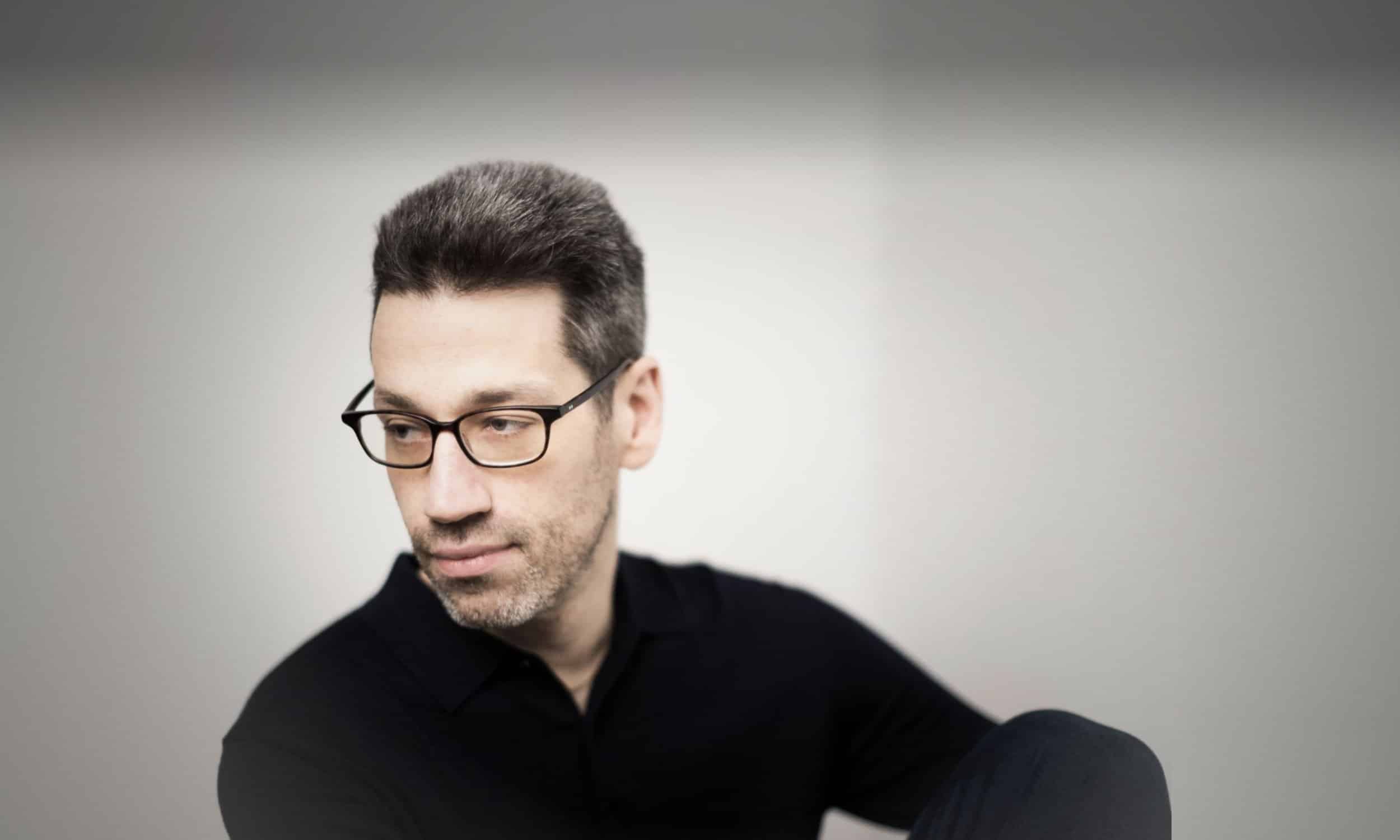
Jonathan Biss: Too many right notes are killing us
Comment Of The DayIn one of his frequent opinion pieces for the NY Times, the pianist touches a sore spot:
… Classical musicians are not trained to talk to God. We are trained not to make mistakes.
There are many reasons for this. Few of today’s classical music performers have written music; ideally we strive to be creative in our interpretive work, but primary creation is a thing we’ve only studied, not experienced. That can lead to paralysis. If you don’t understand how something is made, you fear you might deface it merely by engaging with it.
The problem is made worse by the vast recorded history that precedes us. Marketers like to use the word “definitive” to describe venerated recordings, turning them into part of the canon, as much as the pieces themselves are canonical. For young musicians, it is tempting to sidestep the complicated work of discovering and internalizing these works, blood and guts and all. It’s simpler to declare a specific performance sacrosanct and aim to reproduce it.
Playing an instrument well is phenomenally difficult. It takes a lifetime of arduous work and can become all-consuming, making it easy to forget that technical mastery is a means to an expressive end, not the goal. Mastery is a prerequisite if one is to communicate the essence of a piece of music. In and of itself, it is uninteresting.
This fetishization of perfection might not be surprising, but that doesn’t make it any less damaging. You cannot learn or grow while trying to appear as if you have everything figured out. You cannot talk to God by trying to avoid doing something wrong. Perfection is stagnation…
Read on here.

Another one who doesn’t quite understand what performance is.
What he claims, only goes for mediocre talents.
PS – for the silly down-thumbers:
The truly great talents effortlessly combine superior or perfect technique with spontaneous musicianship, so that the piece they play sounds like being born at the spot like an improvisation, as something vibrant of life.
And then: what is perfect playing? It is not only technique, but also the feeling for nuance, expression, atmosphere, fore- and background. All of this gives ‘body’ and life to the bare notes, it is the subjectivity of the performer which brings the notes to life. Performers who anxiously try to be perfect but forget the other components which belong to perfection, miss the point. They may be replaced in the future by AI. But the great talents know by instinct how the balance has to be.
Enough of pianists who need to be seen to express deep, indignantly held wisdom about this or that, which they apparently feel their thousands of hours of social isolation in the practice room has granted them (and only them). Enough of Igor Levit, Lucas “Lidl” Debargue and now this pencil neck geek. All of you are mediocre. I couldn’t care less what you have to say because your own playing, which is the only possible claim to authority you might even have, is so totally empty. Whatever it is that Biss is flailing around trying to say here, he is part of the problem.
Levit sounds great, Biss too. What power do you have to dismiss them?
Total power. I’m the listener.
I suppose this explains why some people can listen to an amateur orchestra which plays many, many wrong notes and still come away happy. We’ve been spoiled for sure with the extraordinarily high level of playing by so many pianists, violinists and orchestras. Too many errors in playing become a major distraction and the composer or performers intended communication gets sidetracked.
School and community orchestras have enthusiasm, and an interest untainted by money.
If he wants “creative interpretation” I suggest he try listening to the likes of Art Tatum, Oscar Peterson, Hiromi and the much under rated Andre Previn.
It’s funny, because among the galaxy of great jazz pianists, none of those are ones I would have chosen to highlight creative interpretation. May I offer up Bill Evans, Keith Jarrett, Ahmad Jamal and Brad Mehldau.
All preferences are subjective, but the fact that you leave out Art Tatum renders your judgment null. Some things are beyond subjectivity.
Mr. Biss is, of course, spot on. Thank you.
Repetition of a difficult, complex passage of music can also be a path to understanding the impetus behind the creation; of entering the thought pattern of the composer.
My sister, a concert pianist and teacher,
practiced difficult passages, over and over, playing the preceding passages, as part of the exploration of the logic, or so it seemed to me as I listened to her practice. I grew up listening to her do this,
as she explored the various ways she could interpret those passages.
But Bis is correct when he criticizes perfection as the goal. The goal should be the understanding which comes from the intimate relationship between the composer and the one who realized the composition: that becomes greatness magnified.
Not too different from what Debargue was saying in his own piece, is it? And something all the Asian players currently dominating competitions would do well to internalize (no disparagement intended – I deeply admire the fact East Asia is single-handedly rescuing classical from oblivion, but having mastered the craft, transcending it to something deeper must follow). Biss is spot-on. We’ve had more than enough of cookie-cutter Bach, Mozart and Beethoven over the past few decades (thank you, HIPsters). A conductor like Furtwängler had “divinatory powers” (Arrau’s phrase, not mine) at least in part because he was a composer as well. Same is true of Schnabel. Their respective readings of the ever-canonical Schubert and Beethoven were intensely subjective and unique because they understood the written score was only the beginning. They understood that turning those written notes into the actual sounds of music was were the real “magic” takes place, at least when we hear a performance and are convinced something “magical” has taken place, as was the case so often with those two. And of course there were many other interpreters of their time about whom the same could be said: Cortot, Casals, Walter, Szigeti, etc. Can we honestly say we have anyone anywhere near their caliber of *musicianship* (beyond mere technique) today? After the death of Lupu and Moravec, who? Who isn’t nuts, that is (i.e. Afanassiev, Pogorelich). But maybe we do need the likes of the latter two, even if they have lost the plot. As Schnabel said, “Safety last.” He also said great music is always better than it can be performed. Maybe that thought should be freeing, rather than paralyzing. You’re not gonna say everything there is to say about Beethoven’s Op. 111 in a single performance, so you might as well say something instead of nothing at all, as is increasingly the case. Risk a point of view, for chrissakes, or just stay silent.
Too bad Bernstein didn’t fully hold your view when he showcased Gould!
I did not find anything profound here. Classical musicians are used to complaints that they lack “true” artistry (yet older generations are hardly ever accused of this) despite an unprecedented level of training and the sincere efforts of most musicians to find their unique voice and expand the repertoire.
I think we are at a decisive juncture in the history of the West and I’m not sure what it portends. One part of me thinks we are experiencing the end of the Western so called classical music tradition where technically superb performances for a technocratic age seem to leave us empty. I stopped going to concerts in the 90’s when I sensed that orchestras were sounding like synthesisers and the performances were like holographs of the pieces without bite or presence. One hypothesis I had was that the advent of digital sound had influenced live playing. I don’t know. I can remember listening to one of those record review programmes in the early 90’s where a comparison was being made between a Rattle recording of Bartok’s Concerto for Orchastra and Reiner’s. The Reiner sounded like the strings were on fire whereas the Rattle had lost all of that vital central European soul and the notes sounded empty and one dimensional.
Likewise there must be a reason we no longer have ‘great ‘ composers, albeit we have people with ‘talent.’ Perhaps we are at the end of a cultural cycle and we are now left with shiny museum pieces. My entirely subjective view of course.
Many of us lived through the Golden Age, the mid-late 20th century. Thanks to the modernists, it has been in decline ever since.
Especially for violin performances! It’s totally impossible to find something someone who isn’t sound generic and digital as all the same!
My applied graduate voice teacher:
“Don’t worry about being perfect, because you’re never going to be.”
There is no such thing as perfection in musical performance. The people who perform at tge highest skill levels are painfully aware of their flaws. The difference between them and most audiences is that they can hear at that level. The audiences cannot. So, to the audiences ears, they perceive perfection only because they are ignorant of the flaws.
Expression and technique are independent of each other. It is only a myth that great technique somehow lessens expression. While it is possible to have great technique and no expression, technique is not the cause.
I also suspect that some expression can be so sublime and subtle that lesser skilled musicians cannot perceive those subtleties. In the brass and jazz world we joke about music being “higher, faster and louder”. These are the three musical qualities that even the least skilled of us can discern. As we improve and mature, those more base aspects strike us as being crude and unmusical.
If this is true on the bottom end, then can’t we also assume the same is true at the high end. Who is to say that there isn’t a higher realm of performance for which the expressive elements are beyond our own comprehension?
I see him walking around the neighborhood. He is so rail-thin, I’m afraid is diet is what is killing him.
I recall reading a review of a recording of Scriabin preludes or études around twenty years ago that said something like this: “Not since Horowitz has a pianist hit a higher percentage of correct notes in these bearish pieces. Who cares?” The recording was nigh on perfect, and completely bloodless. That isn’t music; its touch-typing.
I prefer older orchestral recordings (by Rozhdestvensky, Previn, Dorati,…) to the newer perfect sounding ones (Jurowski, Wigglesworth,…). The new ones sound somehow woke; inoffensive to the aural palette, but lacking in spice and edge-of-your-seat excitement.
As George Enescu, said: “La perfection, qui passionne tant de gens, ne m’intéresse pas. Ce qui importe, en art, c’est de vibrer soi-même et de faire vibrer les autres.”
As Maurice Ravel said: ‘I strive after perfection, in the knowledge that I wil never attain it, but it is the attempt that counts.’
But then, he meant it for composing, not performing, and he was a mediocre performer at best – even of his own music. According to witnesses it sounded rather bland, detached.
Maybe if you can’t take the heat, get out of the kitchen.
For me the most telling quotation from the NY Times article was this one: “I have been to many more concerts where I felt that the player’s primary goal was to avoid mishaps, to play the piece exactly the way it went in the practice room the day before. I remember little to nothing.”
That recalls the “Global Neutral Style” so prevalent in the playing of various “Gold”-medal winners: “stage-ready,” note-perfect, securely memorized, yet not distinct from the playing of other “Gold” Medal winners in any meaningful way, and ultimately eminently forgettable.
Well, let me then offer an example of the opposite – a winner of the Leeds competition:
https://www.youtube.com/watch?v=nFMPuDVmERE
Better to have graduated from the Morecambe Conservatory and play all the bloody right notes, but not necessarily in the right order.
Ah, the wisdom being shared in the comment section! So many who are fully certain that they Have Seen The Light and graciously share their insights! How could I possibly understand What Performance Is, how could I hear that Igor Levit is mediocre, how would I know that The Golden Age of classical music ended with “the modernists”, if it weren’t for the comment section!
Too bad that you have to be old, fossilized, pompous and pretentious to See The Light while the rest of us stumbles in the dark. It seems such a sacrifice.
I fully agree! Especially the idea that the modernists somehow killed-off the good stuff gals me tremendously.
Sally
With some of the allusions in the comments that, essentially, artists should stick to their core competencies (e.g. pianists who don’t know how to conduct shouldn’t, pianists who play concerts don’t necessarily have great wisdom to impart in the NYT), I am in agreement. Play your concerts and philosophize in the privacy of your home.
What constitutes great performance will always be debated. The American violinist Albert Spalding laughed when he was compared to other fiddlers by an admirer. She said, “They’re all technique and no soul, whereas you…you’re all soul and no technique !”
[ This according to Spalding’s accompanist Andre Benoist ]
Got his Beethoven Sonatas.
He has some moments of a fraction-of-a-second NON-Perfection, yet I still value his performances for the REAL insights and different sounds that come out. Crosshand in Sonata 8 1. is a perfect example of that.
I will always choose Annie Fischer and her numerous wrong notes when playing live over Eric Liu….the definition of boredom….