
Ruth Leon recommends…Divine Egypt – Met Museum
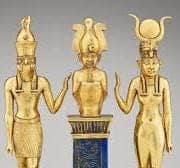
Ruth Leon recommendsIn ancient Egypt, images of gods weren’t just images – they brought the gods to life. Egyptians believed that it was through their depictions in tombs, temples and shrines that the deities could enter sacred spaces and become active participants in rituals, offering a vital connection between the human and divine worlds.
Over Egypt’s long history, its belief system grew to include more than 1,500 gods with many overlapping forms and traits. Subtle visual cues like what a figure wore, how they posed, or the symbols they carried helped identify them and their roles.
Divine Egypt brings together almost 250 works of art and objects, many of them on loan from institutions such as the Museum of Fine Arts, Boston, the Musée du Louvre, Paris, and the Ny Carlsberg Glyptotek, Copenhagen, to examine the imagery associated with the most important deities in ancient Egypt’s massive body of gods. Depictions of the stately falcon-headed Horus, the lion-headed Sakhmet, and the serene, shrouded Osiris reveal the striking ways the kings and people of ancient Egypt recognized and interacted with their gods.
Join Diana Craig Patch, the Curator in Charge of Egyptian Art, and Brendan Hainline, Research Associate, to virtually explore the exhibition Divine Egypt, on view at The Met through January 19, 2026.




Beautifully-stylized art….. And the most remarkable thing about the ancient Egyptions is that they did not develop – when their cultural and imaginative world was felt as ‘complete’, they did not see any point in inventing ‘new things’. It was an essentially static culture, until they were conquered by the Greek and later, the Romans, then they became multicultural.
That static nature was not always wholeheartedly embraced, since we know of a scribe that he did not like it: “Would that I had phrases unknown, sayings unused, new words not yet set down, free of repetitions, devoid of the phrases in that familiar language which the ancestors spoke.”
https://en.wikipedia.org/wiki/Complaints_of_Khakheperraseneb