
The death of music criticism just got a whole lot closer
NewsFrom my new essay in The Critic:
The death of music criticism, long foretold, came a whole lot closer this summer. One day in mid-July, the New York Times sacked both of its chief music critics, pop and classical, along with chief theatre critic Jesse Green and Margaret Lyons, who covered TV.
The reason given for their “reassignment” was more alarming than the bloodbath itself. …
Criticism, you see, is a fragile art. Like conducting, it is largely a confidence trick. If musicians see more in a baton than an aerial wave, the wielder will grow six inches taller. If a critic produces a “Verdi on Viagra” verdict, he or she will start to believe their own myth.
The reverse is also true. Conductors can be deflated by sourpuss cellos and critics by a down-page slot. Their self-belief rests on a convention of unsackability….
Full essay here.
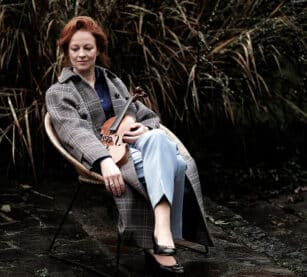


The really good viola players aren’t sourpusses.
Mmmm…… I’m not sure whether the decline in classical music criticism is a bad or a good development, thinking of the many completely useless nitwits without any musical background or training, or sorry types who failed to build a performance career in classical music and ventilate their resentment onto the winners on the platform, and the people who were asked to write about concerts by the newspaper or journal because they could not find anybody else.
What is a critic?
https://www.cambridge.org/core/books/abs/cambridge-companion-to-stravinsky/stravinsky-and-the-critics/3082C2F4A99CACFC89D14114845E19DC
For performers it is already quite hard to endure exposure to ignorant, deaf critics, let alone for composers. (And as everybody knows, this is not restricted to music, most critics in the visual arts are blind – the arts attract invalids.)
And then, we have Slonimsky’s great collection of hateful critical resentment:
https://en.wikipedia.org/wiki/Lexicon_of_Musical_Invective
Stravinsky about critics: “I had another dream the other day about music critics. They were small and rodent-like with padlocked ears, as if they had stepped out of a painting by Goya.”
But according to Norman, Stravinsky’s reputation is in free fall anyway so no need for critics to finish the job.
https://thecritic.co.uk/issues/june-2023/stravinskys-reputation-is-in-freefall/
My own experience with critics is that reviews are either an intense damning or enthusiastic praise and almost never something in between. Whom to believe? My PA inclines to the first, and I would wish to believe the last, and best seems to be to suspend disbelieve till one knows the critic personally. I have met critics who would write one thing in their review and express the opposite over tea.
I have come to believe that most critics – reviewing performances – prefer to be negative since this somehow would show their expertise, while positive accolades are thought to reveal gullability and ignorance. But with one exception: new music produced by young women, preferably from immigrant background and completely unaware of the existence of a classical music repertoire, which is always reviewed with a warm, positive blanket of patronizing encouragement. I think this is because of the critic’s fear that he may appear in the next edition of Slonimsky’s book.
As so often, TLDR
It’s never for people like you.
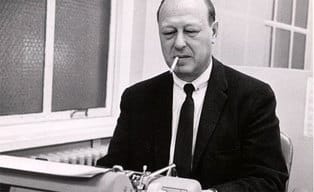
Fun to be reminded of Harold C Schonberg’s inimitable panache. One of my favourite Schonberg quotes (from a 1961 NYPO review): “And then came Glenn Gould to play Beethoven’s Fourth Piano Concerto. He came with something new; a glass of water on the edge of the piano. At odd intervals he sipped. What next? Can we look forward to Mr. Gould’s playing Beethoven next year with a seidel of beer and a ham sandwich to occupy himself during orchestral tuttis?”
That was not the “death” of Music Criticism. Zachary Woolfe’s inept writing was. He was transferred for, no doubt, insulting singers, revealing a poor understanding of the human voice, insulting readers who complained about his bad ideas. Jesse Green was little better. The only question is who they will hire. What’s suprising is that all the “critics” were not removed. Yet. Frankly, we don’t need critics at all. We need writers who will do previews and sensitive interviews. While artists need praise, they certainly don’t need criticism from journalists!
Previews: good idea. And audiences can make-up their own mind after the concert, without the help of critics.
Great news. These “critics” are beyond useless. Let them write their little pieces on Substack and solicit “subscriptions” there, and see how much their opinions matter once they are stripped of their publicity function at a mainstream media outlet.
1) What you don’t get, and what the NYT refuses to divulge, are the statistics: how many clicks do the NYT reviews get?
Clicks are directly correlated with advertising dollars.
Judging from the number of comments by readers (if the comments section is even open), not enough to justify the reviewers’ salaries, or the costs of printing and electronic storage.
2) “Critic” has been replaced by “influencer”, yet they both serve the same purpose, to have a loyal following.
3) Criticism is therefore not dead, because influencing is very much alive.
The NYT just did not have the right influencer in place. Critics no longer command respect but influencers do.
4) Who determines who’s the right “chief classical music influencer”?
Not the NYT, only the NYT readership.
Trial and error, then see who gets the most clicks.
But that can be said of Harold C Schonberg as well, how did they measure how influential he really was?
At that time, nothing could be quantified at the microscopic level today, so everything was by word of mouth, but “word of mouth” is just what we call today “echo chamber”.
So, yes, within the echo chamber of yesteryear of a certain class of New Yorkers (and Londoners, according to Lebrecht), Schonberg probably had a devoted following, but numerically, really, how many were they?
Schonberg could hide behind his non-quantified myth, but if today’s metrics and methods had been available back then, maybe it would’ve revealed that he had very little readership, which would’ve gone a long way to puncture that hot air myth balloon.
I think Schonberg had quite a wide reach, more so than most critics. He also wrote several books for his intended wider audience of grass roots classical musicians and music lovers. The Great Pianists and The Great Composers are still staples in the music collections of public libraries across North America.
The Great Pianists went through two editions. Over the last 65 years, it has never been out of print, which indicates steady sales, likely in the hundreds of thousands. My childhood music teacher in rural Western Canada had a copy and I read it when I was 10 or 11.
Schonberg also fed the Romantic Revival and he had the ear of music lovers who bought such LPs across North America and Europe.
Oh dear, people will now have to use their ears and think for themselves. How terrible.
It’s simple. Nobody buys papers anymore or subscriptions and fewer people are interested in reading what educated critics have to say. This is because critics are often too qualified for today’s public. The new world of opinions and commentators have a different platform- social media- those with the loudest voice are often least knowledgeable, but the most opinionated and most followed. Losing a few critics who had the monopoly on reviewing is not such a bad thing- those who were over flattered and believed their importance, with no career as such in the profession they comment on, often pushing agendas or prejudices can happily be put out to pasture. But the dumbing down from critic to pure uneducated opinion is a sad sign of the times.
But in reality, who cares about the demise of music critics apart from a few Slippedisc readers with too much time on their hands? At least SD offers them a platform, poor dears.
Love to read this!
The whole subject of critics is moot. You should simply let other people do their thingy and stop complaning abot typing erors & other personal aproaches to life & let other people be free to be themselfes, especially PA’s who merely do their best and have other thigns to worry about.
Sally
Are you an influencer IRL?
Something to look forward to, though by no means able to stop the inexorable trend: next spring Oxford University Press will publish “Defending the Music: Michael Steinberg at the Boston Globe 1962-1976,” a collection of about 300 trenchant, erudite, and entertaining reviews and essays. The book was conceived by Michael’s widow, the eminent violinist Jorja Fleezanis, and edited by Marc Mandel, Jacob Jahiel, and myself following her sudden and untimely death.
Thank you for carrying it on!
In the UK half a century ago many music critics reviewed much more than the music performed. Their reviews were splendid examples of creative writing about the works themselves and their aim being to involve the reader in that interest as well as the performance being reviewed. These were of course the days when newspapers published reviews the day following performances giving a greater urgency to their writings and for some of the public a desire to read them.
Is there anyone out there with the creative talents of an Andrew Porter, John Higgins, Edward Greenfield, Desmond Shawe-Taylor, William Mann, Felix Apprahamian, Gerald Larner, Philip Hope-Wallace, Conrad Wilson and others?
If conducting is “largely a confidence trick” then there’s no point in having music critics.